


Why do we need to be emotionally intelligent educators?
Dr Sweta Mukherjee
Faculty, Indus Research and Training Institute
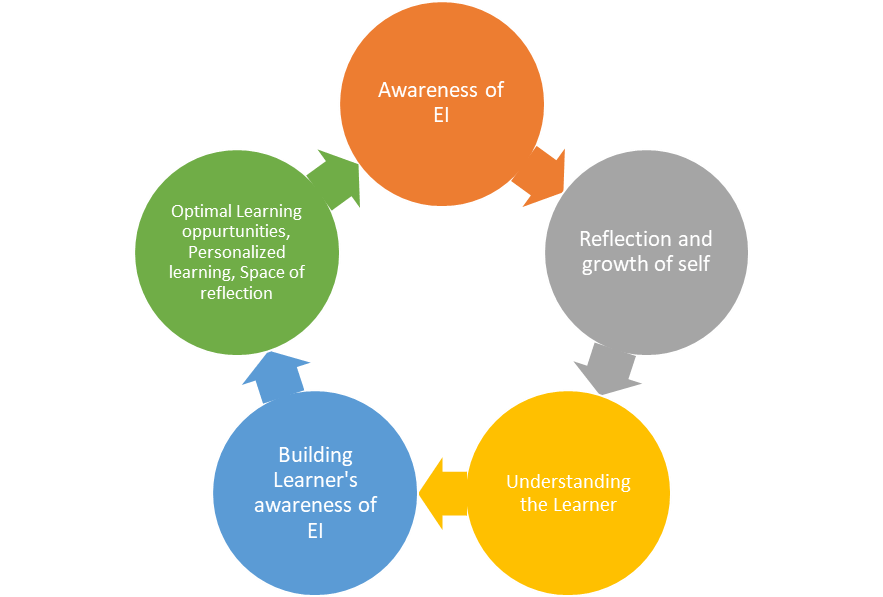
For almost a decade now we have been discussing the relevance of emotional intelligence (EI) in the academic context. There seems to be a unanimous agreement that EI is an important component in the holistic development of the learners. However, as educators we very seldom seem to ponder on the need for being aware of our own emotional intelligence, taking stock of our physical, mental, cognitive, and spiritual energies, and ensuring that we strive towards a balance in energies is essential to our well being as educators. Respecting our energies and being aware of our emotional health is imperative for the smooth functioning of every aspect of our professional and personal lives. EI also plays a fundamental role in every other aspect of our work. Educators with high levels of EI tend to be able to understand themselves better and in turn understand their learner’s behavioural and psychological well-being. They tend to be more sensitive to disruptive behaviours, provide feedback to their learners, and get feedback that helps them grow into better educators. Educators as practitioners of EI in their classroom spaces help foster an optimal learning environment. We need to explore ways in which we can build an awareness of EI in our learners, and in collaborative learning environments.