


Beyond the Identities We Inherit: Education as a Force for Social Change
By Ms.Uttama Singh
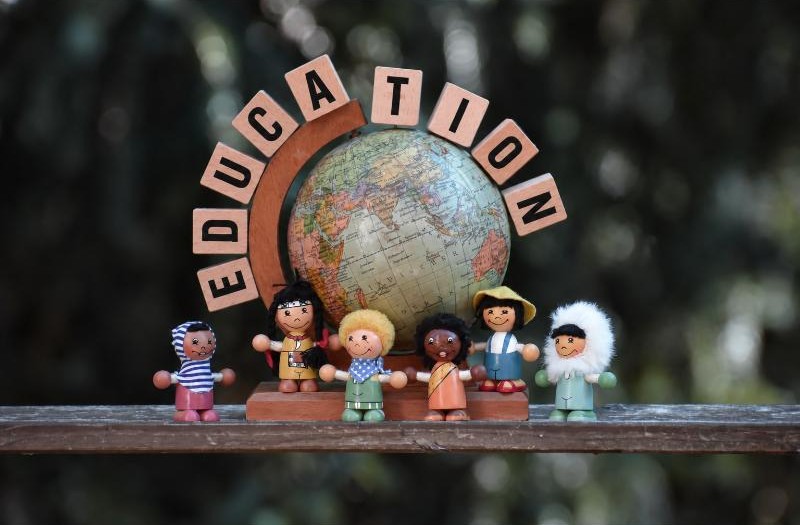
If we want to reimagine the future and the shared ways in which a community thrives and lives in the world, we must understand the language of the community, its ancestral stories, beliefs, values, knowledge, traditions, relationships, practices, ways of working, and its unique ways of living. I wonder how a culture decides what it means to have a “good life” or be “successful”, and how education shapes these ideas. If we want to reimagine the future of a culture then we should begin by rethinking the ways in which children learn, and, in doing so, we might also reshape the ways we come to understand others, ourselves and the world that we co-exist in.
This understanding from the documentary ‘Schooling the World’ stayed with me. It made me wonder whether education is always an act of empowerment, or whether it can sometimes quietly teach children what and who they should become. If one way of knowing, one language, one culture or one definition of “a better life” is presented as being superior, what happens to the knowledge and identities that children inherit from their communities?
This question took me back to the story that is highlighted in Rudolf Steiner’s book, Education as a Force for Social Change (1997); on the premise of humanity, explicitly captured in the excerpts about the German and English soldiers during World War I. On a cold Christmas Eve, when the soldiers on either side were hiding in their trenches, a small instrument began playing Silent Night. A German soldier responded with Stille Nacht (in German language; a carol that crossed language, geography, and generations), and gradually soldiers from both sides began singing together. They came out of their trenches, exchanged chocolates, shared photographs of their families, and even played football. For a brief moment, they were no longer enemies. They were simply human beings.
I am continuously asking myself- what enabled them to go beyond the identities they had been assigned? What took place at that moment when being “German” or an “English”, “enemy” or “ ally”, became less significant than the fact of simply being human?
And then another question emerges from the Schooling the World documentary: Does education sometimes do the opposite? Does it cause us to become more aware of the identities that divide us, or whose knowledge is superior, or whose language is more valuable, and whose way of life is regarded as progressive?
Perhaps the purpose of education is not to erase identity, nor to replace one identity with another. Instead, it might be to enable us to understand our origins without becoming prisoners of them, and to meet another human being without first looking at the labels assigned to them. It could be that education must become a force for social change when it enables us to know our roots, honour them, and help us move beyond the boundaries of those identities so that we encounter each other as human beings.